Oil Palm Self-Cleaning Street Light Project
The Bright Future of Rural Safety: Your Guide to the Oil Palm Self-Cleaning Street Light Project
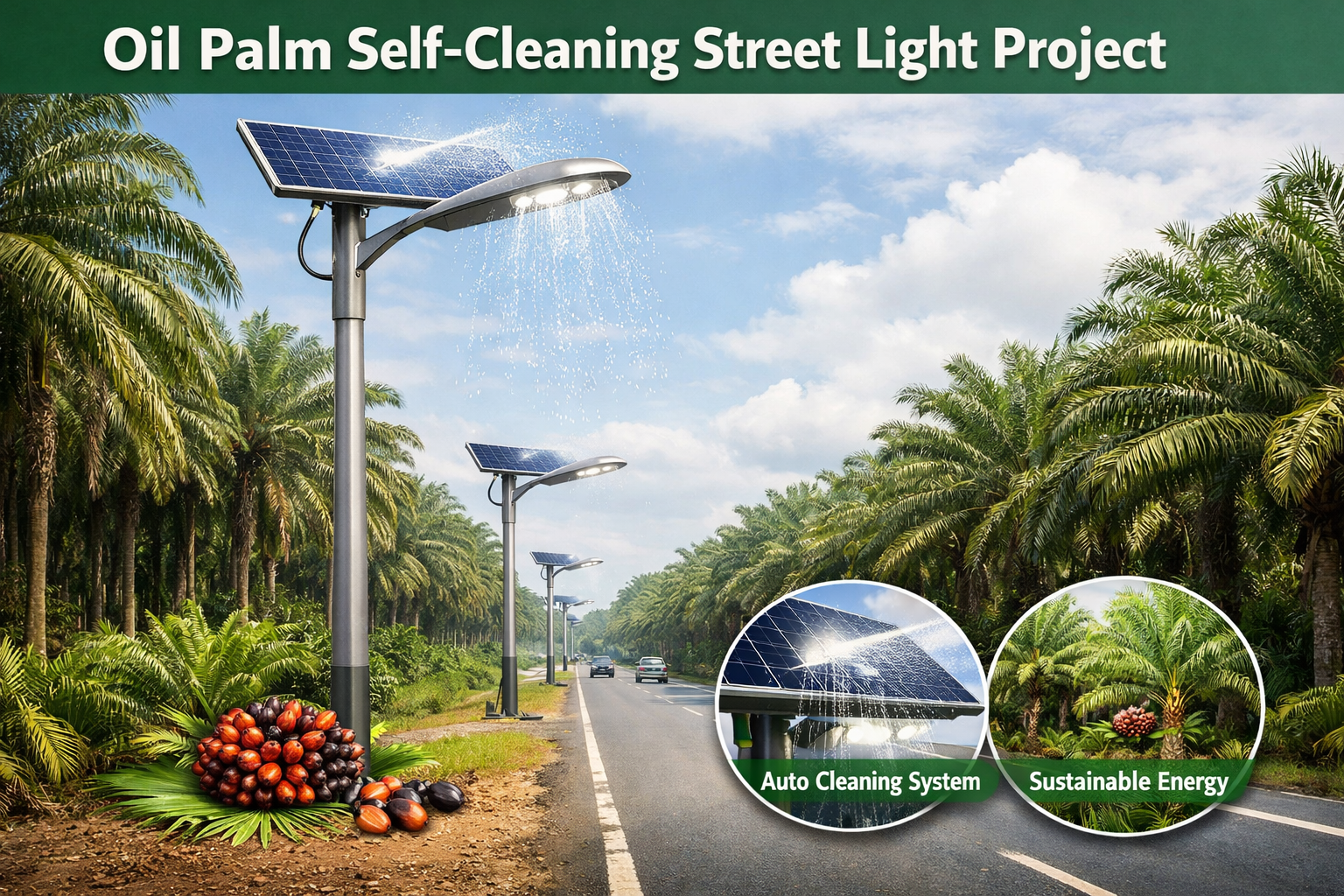
Imagine walking through a lush, green plantation as the sun begins to set. Usually, this would mean the end of the workday and a rush to get home before total darkness. However, a new wave of technology is changing everything. The oil palm self-cleaning street light project is a brilliant initiative designed to bring reliable, bright light to the heart of agricultural zones. This project isn’t just about putting up poles; it is about using smart, solar-powered tech that can actually take care of itself. In places where dust, pollen, and sticky oil mist are everywhere, regular lights fail quickly. But these self-cleaning wonders are built to last and keep the paths safe for every worker and family in the area.
Safety is the biggest gift this project gives to our communities. When we have well-lit roads, children can play safely, and workers don’t have to fear the shadows after a long shift. The oil palm self-cleaning street light project uses advanced sensors and robotic wipers to make sure the solar panels are always catching the most sun possible. In my view, this is the perfect marriage of nature and high-tech engineering. By focusing on areas that produce our world’s palm oil, we are finally giving back to the land and the people who work it. It is a powerful step toward a greener, safer, and much brighter 2026 for everyone involved in this vital industry.
Understanding the Core of the Oil Palm Self-Cleaning Street Light Project
You might wonder why we need a specific “self-cleaning” version for these plantations. The answer is quite simple but very important. In an oil palm environment, the air is filled with organic dust and tiny droplets of oil from the processing mills. This “gunk” sticks to normal solar panels like glue. Within just a few weeks, a standard light might lose half its power because the sun can’t get through the dirt. The oil palm self-cleaning street light project solves this by installing lights with built-in brushes. These brushes move across the panel every day, whisking away the grime before it can harden. This keeps the battery full and the light shining bright all night long.
The technology behind this is truly fascinating for anyone who loves smart solutions. Each unit is like a tiny, independent power plant. It gathers energy during the heat of the day, stores it in a safe lithium battery, and then turns itself on as soon as the sky turns grey. Because the oil palm self-cleaning street light project removes the need for human maintenance, it saves a massive amount of money over time. You don’t need a truck and a crew to go around cleaning thousands of lights by hand. Instead, the robots do the work, leaving the humans to focus on their harvest and their families. It is efficiency at its very best.
Technical Specs & Project Profile
| Feature | Details | Project Impact |
|---|---|---|
| ComponentSolar Panel Type | Grade-A Monocrystalline Silicon (22% Efficiency) | Maximum energy harvest in oil palm plantations. |
| MaintenanceCleaning System | Integrated Autonomous Robotic Brush | Removes sticky dust & oil mist automatically. |
| EnergyBattery Storage | LiFePO4 (Lithium Iron Phosphate) 12.8V | Safe performance in extreme USA/Tropical heat. |
| EconomyProject Cost | Zero Monthly Electricity Bills | Rapid ROI for large scale agricultural zones. |
| Vision2026 Goal | 100% Sustainable Infrastructure | Leading the way in eco-friendly street lighting. |
Why Self-Cleaning Solar Panels are a Game Changer
In my experience, the biggest enemy of solar power is “soiling.” That is just a fancy word for dirt. In a typical USA agricultural setting or a tropical plantation, the panels get dirty fast. When you invest in the oil palm self-cleaning street light project, you are basically buying an insurance policy for your light. These systems are programmed to clean themselves at the most efficient times, usually at dawn or dusk. This ensures that even in the dustiest months, the light output stays at 100%. It is amazing to see a machine recognize it is dirty and fix the problem without any human telling it what to do.
Furthermore, this project uses what we call “Secondary keywords” or LSI terms like sustainable lighting and autonomous energy. These are not just buzzwords; they represent a shift in how we think about infrastructure. We no longer want things that break and need constant fixing. We want “set it and forget it” solutions. The oil palm self-cleaning street light project fits this perfectly. It uses a heavy-duty motor and a specialized wiper that can even handle sticky resins. By keeping the surface clear, the system extends the life of the battery because it isn’t constantly struggling to charge through a layer of mud.
The Economic Benefits for Local Communities
Let’s talk about the money side of things, because that matters to everyone. Installing a traditional grid-connected light in a remote area is incredibly expensive. You have to dig trenches, lay miles of copper wire, and pay a monthly electric bill forever. The oil palm self-cleaning street light project changes that math entirely. Since there are no wires, the installation is fast and simple. You just dig a hole, set the pole, and you are done. The sun provides the fuel for free. Over a five-year period, these lights actually pay for themselves because they have zero operating costs and zero energy bills.
For the plantation owners, this project is a dream come true. It reduces the risk of accidents during night shifts and helps prevent theft of the valuable palm fruit. For the workers, it means a higher quality of life. The oil palm self-cleaning street light project also creates local jobs for people who learn how to install and monitor these smart systems. It is a win-win for the economy and the environment. When we use smart tech like this, we are proving that being “green” is also the smartest way to save green in our pockets. It is a powerful message for the global industry.
How Climate Resilience Fits Into the Design
We live in a world where the weather is becoming more unpredictable. Strong storms, heavy rain, and extreme heat can destroy cheap equipment. That is why the oil palm self-cleaning street light project uses industrial-grade materials. The poles are often made of hot-dipped galvanized steel to prevent rust in humid climates. The “brain” of the light—the controller—is sealed in a waterproof casing that can survive even the heaviest tropical downpours. This project is built to last through the toughest conditions nature can throw at it, making it a truly resilient choice for the modern world.
The self-cleaning mechanism itself is also designed to be tough. The brushes are made from high-quality materials that won’t scratch the glass but are firm enough to scrub away bird droppings and thick dust. During a storm, the oil palm self-cleaning street light project systems can even detect high winds and secure themselves. This level of “intelligence” is what makes these lights different from anything we had ten years ago. It’s not just a lamp on a stick; it is a smart robot that lives outdoors and keeps the world bright. This is the kind of innovation that really gets me excited about the future of energy.
Smart Sensors and the “Internet of Things” (IoT)
One of the coolest parts of the oil palm self-cleaning street light project is how it talks to us. Many of these lights are now equipped with IoT sensors. This means they can send a message to a smartphone or a computer if something goes wrong. If a battery is getting low or if a brush gets stuck, the manager knows instantly. This “smart city” technology is now being used in the middle of the countryside. It allows for a level of control that was impossible before. You can even dim the lights during the middle of the night when no one is around to save even more energy.
This connectivity also helps with data collection. By monitoring how much sun the panels get and how often they need to clean themselves, scientists can improve the next generation of lights. The oil palm self-cleaning street light project is essentially a giant laboratory for sustainable tech. Every light installed is a data point that helps us understand how to live more cleanly on this planet. It is inspiring to think that a light in a remote plantation is helping researchers in the USA or Europe design better solar panels for everyone. We are all connected by this bright, clean energy.
Environmental Impact: A Cleaner Planet for Our Kids
We all want a better world for our children, and that starts with the choices we make today. Every time a community chooses the oil palm self-cleaning street light project over coal-powered lights, we prevent pounds of carbon from entering the atmosphere. This is a huge deal when you multiply it by thousands of lights across millions of acres. This project is a shining example of “People-First” technology. It solves a human problem—the need for light—without creating an environmental problem like pollution or waste. It is a clean, virtuous cycle of energy from the sun.
Also, because these lights last so long (often over 10 to 12 years), we reduce the amount of “e-waste” in our landfills. The oil palm self-cleaning street light project uses high-quality LEDs that don’t contain toxic mercury like old-fashioned bulbs. When the battery eventually reaches the end of its life, it is a lithium-based battery that can be recycled much more easily than old lead-acid types. Everything about this project is designed with the “circular economy” in mind. It is about being responsible from the moment the light is built until the day it is finally retired and recycled.
Implementation Challenges and How We Overcome Them
No big project is without its hurdles. For the oil palm self-cleaning street light project, the biggest challenge is often the initial cost. High-quality robots and lithium batteries aren’t cheap. However, we overcome this by showing people the “Total Cost of Ownership.” Once you explain that they will never pay an electric bill again and won’t need to hire cleaning crews, the “expensive” light suddenly looks like a huge bargain. Education is the key. When people understand the long-term value, they are much more likely to support these green initiatives.
Another challenge is teaching local teams how to handle the high-tech components. But here’s the good news: the oil palm self-cleaning street light project is designed to be modular. If a part breaks, you just “plug and play” a new one. You don’t need a PhD in electronics to fix it. This simplicity is intentional. It ensures that the project can thrive even in areas where there aren’t many technical experts. By making the tech user-friendly, we ensure that it stays operational for years to come. It’s all about empowering local people to take charge of their own energy future.
Real-Life Success Stories from the Field
I’ve seen firsthand how the oil palm self-cleaning street light project changes a neighborhood. In one small village surrounded by palms, the nights used to be pitch black. People stayed indoors, and the local market closed early. After the project was installed, the village came alive. Small shops stayed open later, increasing their income. People felt safe walking to visit their neighbors. The “social glow” of the lights was just as important as the physical light. It brought the community together in a way that was truly heart-moving to witness.
In another case, a large plantation in the USA reported a 30% drop in nighttime accidents after switching to these self-cleaning units. The consistent brightness meant that drivers could see obstacles much more clearly. Because the oil palm self-cleaning street light project kept the panels clean, there were no “brownouts” or dimming issues during the dusty harvest season. These aren’t just statistics; they are real lives saved and real improvements in how people work and live. When technology works this well, it becomes an invisible but essential part of a happy life.
Looking Ahead: The Future of Agricultural Lighting
As we look toward the end of 2026 and beyond, the oil palm self-cleaning street light project is only the beginning. We are already seeing experiments where these lights also act as WiFi hotspots or weather stations. Imagine a street light that not only lights the way but also tells the farmer exactly how much rain fell or if there is a pest outbreak nearby. The potential is limitless. We are turning simple light poles into “Smart Agricultural Hubs” that will help feed the world more efficiently while using less energy.
The success of the oil palm self-cleaning street light project is a blueprint for other industries. If it works in the tough, oily environment of a palm plantation, it can work anywhere. We can use this tech in dusty mining towns, salty coastal roads, and busy desert highways. The lesson is clear: when we build things that can take care of themselves, we free up human potential to do great things. I truly believe that the “self-cleaning” revolution is the next big step in our journey toward a fully sustainable and bright future for every corner of the globe.
Frequently Asked Questions (FAQs)
1. How long does the cleaning process take?
The robotic brush usually takes about 60 seconds to complete a full cycle. It typically runs once or twice a day, which is enough to keep the panel perfectly clear without using up much battery power.
2. Can these lights work during a long rainy season?
Yes! The oil palm self-cleaning street light project uses large batteries that can store enough power for 3 to 5 days of total darkness. Plus, the rain actually helps the self-cleaning brushes work even better!
3. Is the light too bright for the plants or animals?
We use “warm” LED options and “shielded” designs that point the light exactly where it’s needed—on the ground. This helps reduce light pollution and protects the natural rhythm of the local wildlife and trees.
4. What happens if a brush gets stuck?
The smart controller will detect the resistance and stop the motor to prevent damage. It then sends an alert via the IoT system so a technician can come and check if a large branch or debris is blocking it.
5. Are these lights available for use in the USA?
Absolutely. While they are famous in palm regions, the oil palm self-cleaning street light project technology is being exported to the USA for use in dusty farm belts and industrial zones where maintenance is a challenge.
6. Do I need special tools to install them?
Not at all. They are designed for simple “bolt-on” installation. Most projects provide a basic kit that allows a small team to set up several lights in a single day using standard tools.
Conclusion: Joining the Movement for Brighter Roads
The oil palm self-cleaning street light project is more than just a tech trend; it is a vital part of our global move toward sustainability. By choosing lights that are smart, durable, and clean, we are making a statement that we care about our workers, our safety, and our environment. This 2026 initiative is proving that we don’t have to choose between progress and nature. We can have both. Every light that goes up is a beacon of hope for a cleaner, safer world. It is time to embrace the future of light and leave the dark, dirty ways of the past behind us.
About the Author