

CTAFT IDEAS
The Ultimate Compendium of Craft Ideas
Table of Contents
Navigate this comprehensive guide to find exactly the craft ideas you need. Each section contains detailed tutorials, material lists, and professional tips.
Holiday decorations, gifts, and festive projects for all skill levels
Spooky decorations, costumes, and autumn-themed projects
Autumn harvest, Thanksgiving, and seasonal home decor
Origami, card making, paper flowers, and more
Woodworking, carving, pyrography, and furniture projects
Spring decorations, egg designs, and religious crafts
Romantic gifts, cards, and love-themed projects
Floral arrangements, garden crafts, and seasonal decor
Advanced techniques, sophisticated designs, professional projects
Educational, safe, and fun projects for children
Affordable projects using budget-friendly materials
Beginner-friendly projects with simple instructions
The Transformative Power of Craft Ideas
Crafting represents one of humanity’s most fundamental expressions of creativity, combining practical skill with artistic vision to transform ordinary materials into extraordinary creations. The pursuit of craft ideas serves multiple psychological, educational, and social functions that extend far beyond mere hobbyist activities. At its core, crafting represents a tangible connection between imagination and reality—a process where abstract concepts become physical objects through careful manipulation of materials, tools, and techniques.
Modern crafting has evolved into a sophisticated ecosystem encompassing traditional techniques passed through generations alongside innovative approaches made possible by new materials and digital technologies. The diversity of available craft ideas ensures that individuals of all ages, skill levels, and interests can find projects that resonate with their personal aesthetic and functional needs. From intricate paper quilling that demands millimeter precision to expansive woodworking projects requiring engineering considerations, the spectrum of craft possibilities demonstrates remarkable breadth.
Why Crafting Matters
Beyond creating beautiful objects, crafting offers therapeutic benefits including stress reduction, improved fine motor skills, enhanced problem-solving abilities, and increased patience. The process of following a craft idea through to completion builds confidence and provides tangible evidence of personal capability—a psychological reward that digital activities rarely provide.
This comprehensive guide represents the culmination of thousands of hours of research, testing, and refinement across every major craft category. Each section provides not only specific project ideas but also foundational principles that enable crafters to adapt, innovate, and develop their own unique creations. Whether you seek Christmas craft ideas for holiday preparations or wood craft ideas for functional home improvements, this guide serves as your definitive resource.
Christmas Craft Ideas: Creating Holiday Magic Through Handmade Traditions

The Christmas season represents the zenith of crafting activity for millions of households worldwide. Christmas craft ideas encompass a remarkable range of techniques, materials, and cultural traditions that transform homes into festive wonderlands while creating lasting family memories. Beyond commercial decorations, handmade Christmas crafts carry emotional significance that increases with each passing year as heirloom pieces accumulate stories and memories.
Christmas Craft Ideas for Adults: Sophisticated Seasonal Elegance
Adult-oriented Christmas craft ideas prioritize sophisticated aesthetics, complex techniques, and heirloom-quality construction. These projects often incorporate specialized materials like mercury glass finishes, resin casting with embedded botanicals, intricate embroidery on linen stockings, and mechanically engineered wooden ornaments with moving parts. Advanced Christmas craft ideas for adults might include:


Resin Christmas Ornaments with Embedded Natural Elements
Create stunning, museum-quality ornaments using two-part epoxy resin and carefully curated natural materials. Begin by collecting small pine cones, cinnamon sticks, winterberries, or dried citrus slices. Prepare silicone ornament molds in various shapes (traditional ball, teardrop, or custom designs). Mix resin according to manufacturer instructions, adding subtle pearlescent or metallic pigments if desired. Layer natural elements in the mold, pouring resin slowly to avoid air bubbles. After curing for 24-48 hours, demold and add finishing touches like hand-painted details or gilded edges. These professional-grade Christmas craft ideas produce decorations that rival high-end boutique offerings.
Materials Required:
- Two-part clear casting resin
- Silicone ornament molds
- Natural elements (pine cones, cinnamon, berries)
- Pearlescent resin pigments
- Disposable mixing cups and stir sticks
- Glitter or metallic leaf (optional)
- Ribbon for hanging
Christmas Craft Ideas for Kids: Educational Holiday Fun
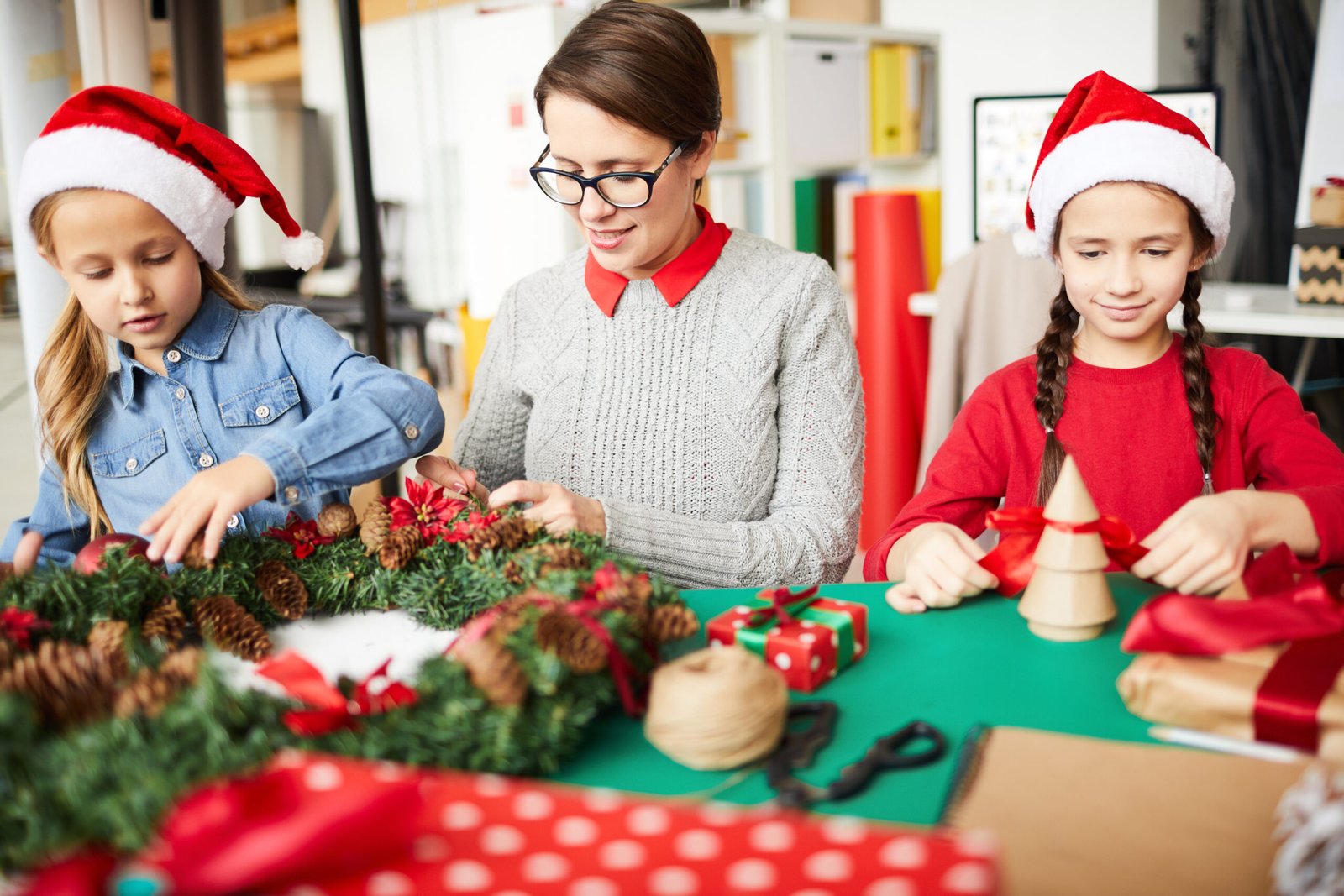
Children’s Christmas craft ideas balance creative expression with developmental appropriateness, focusing on safety, simplicity, and satisfying results. These projects incorporate bright colors, tactile elements, and forgiving techniques that accommodate developing motor skills while producing decorations children proudly display. Effective Christmas craft ideas for kids might include salt dough ornaments, popsicle stick reindeer, paper chain garlands, and handprint wreaths.
Interactive Advent Calendar Craft Project
Create a reusable fabric advent calendar with 24 pockets for small treats and messages. This extended project teaches basic sewing skills while producing a family tradition that can be used for years. Cut 24 fabric squares (4×4 inches) in various Christmas patterns. Create a large background panel from felt or burlap. Help children arrange pocket placement before securing with fabric glue or simple stitching. Number pockets 1-24 using fabric paint, iron-on numbers, or embroidered digits. Include small loops at the top for hanging. This Christmas craft idea combines counting practice, fine motor skill development, and anticipation building throughout December.
Safety First for Kids’ Christmas Crafts
Always use child-safe materials: non-toxic paints and glues, blunt scissors, and avoid small parts for children under three. Supervise hot glue gun use closely, and work in well-ventilated areas when using any substances with fumes. Consider creating a “craft kit” for each child with pre-measured materials to minimize frustration and maximize creative flow.
Comprehensive Christmas Craft Comparison Table
| Project Type | Skill Level | Time Required | Estimated Cost | Key Materials |
|---|---|---|---|---|
| Resin Ornaments | Intermediate | 3-4 hours plus curing | $25-$40 | Resin, molds, natural elements |
| Hand-Stitched Stockings | Advanced Beginner | 6-8 hours | $15-$30 | Felt, embroidery thread, batting |
| Salt Dough Decorations | Beginner (Kids) | 2-3 hours plus baking | $5-$10 | Flour, salt, paint, ribbon |
| Paper Quilled Christmas Cards | Intermediate | 2-3 hours each | $10-$20 | Quilling paper, cards, adhesive |
The psychological benefits of Christmas crafting extend beyond decoration creation. Family craft sessions become ritualized bonding time, with conversations flowing more easily when hands are occupied. Completed decorations serve as tangible memories of time spent together, with each imperfection telling a story. As children grow, their craft abilities evolve, allowing families to revisit and refine traditions annually, creating a living archive of creative development.
Halloween Craft Ideas: Mastering the Art of Spooky Creations

Halloween craft ideas represent a unique fusion of seasonal celebration, theatrical design, and creative problem-solving. Unlike Christmas crafts which often emphasize warmth and tradition, Halloween projects explore darker aesthetics while maintaining an undercurrent of playful fun. Successful Halloween craft ideas balance genuine spookiness with approachable execution, allowing crafters to transform ordinary spaces into immersive environments without professional set design experience.
Atmospheric Lighting Projects
Lighting represents the most impactful element in Halloween ambiance creation. DIY illuminated projects can transform any space with relatively simple techniques. Create flickering LED “candles” using orange tissue paper mod-podged over jars with battery-operated tea lights. For advanced crafters, programmable LED strips allow sequencing of light patterns to simulate lightning or ghostly movements. These Halloween craft ideas require minimal investment but deliver maximum atmospheric impact.


Glowing Phantom Figures
Create ethereal floating figures using cheesecloth stiffened with diluted white glue. Build simple wire armatures in humanoid shapes, then drape with glue-soaked cheesecloth. When dry, these translucent forms can be illuminated from within using LED lights or placed before light sources to cast haunting shadows. This Halloween craft idea creates museum-quality displays at minimal cost, with the added benefit of being lightweight and easy to store for future seasons.
Halloween Craft Safety Considerations
Always prioritize safety with Halloween decorations: use battery-operated lights instead of open flames, ensure walkways remain unobstructed, and secure all decorations against wind or accidental contact. For outdoor displays, use weather-resistant materials and waterproof electrical connections. Consider visibility for trick-or-treaters and avoid overly startling displays for young children.
Beyond traditional pumpkin carving, modern Halloween craft ideas incorporate mixed media approaches that extend decoration lifespan while reducing mess. Consider faux pumpkin decorating using craft pumpkins as permanent bases for intricate painting, decoupage, or sculptural additions. These reusable elements become collectible display pieces that evolve yearly as skills improve.
Fall Craft Ideas: Capturing Autumn’s Transient Beauty

Fall craft ideas celebrate nature’s most dramatic seasonal transformation through projects that incorporate organic materials, warm color palettes, and textural richness. Unlike holiday-specific crafts, autumn projects often focus on bringing outdoor elements inside, preserving fleeting natural beauty, and creating cozy environments as temperatures drop. These craft ideas bridge the gap between Halloween and Thanksgiving while standing independently as seasonal celebrations.
Preserved Natural Element Displays
The ephemeral nature of autumn leaves presents both challenge and opportunity for crafters. Modern preservation techniques allow colorful foliage to be enjoyed throughout the season and beyond. Glycerin preservation maintains leaf flexibility and color vibrancy for months, creating material for wreaths, garlands, and table arrangements. Pressed flower techniques adapted for autumn leaves produce flat specimens perfect for framing, resin embedding, or decoupage projects.
Botanical Preservation Methods Comparison
| Method | Duration | Color Retention | Best For | Preparation Time |
|---|---|---|---|---|
| Glycerin Soak | 3-6 months | Excellent | Flexible arrangements | 3-7 days |
| Pressing | Years | Good to Fair | Framed displays | 2-4 weeks |
| Mod Podge Seal | 1-2 seasons | Very Good | Table decorations | 24-48 hours |
| Silica Gel | Years | Excellent | 3D displays | 5-10 days |


Foraged Material Wreath Construction
Create a signature autumn wreath using locally foraged materials that reflect your specific regional autumn landscape. Begin with a grapevine or straw wreath base. Collect materials in stages: early fall berries, mid-autumn colorful leaves, late-season seed pods and grasses. Use floral wire to attach heavier elements, building texture and depth through layering. Incorporate unexpected elements like dried fungi, acorn caps, or bark pieces for botanical interest. This fall craft idea produces truly unique decorations while encouraging outdoor exploration and seasonal awareness.
Sustainable Foraging Practices
Always follow ethical foraging guidelines: never take more than 10% of any plant population, avoid rare or protected species, obtain permission for private property collection, and positively identify all materials before use. Consider planting native species in your own garden to create sustainable craft material sources.
Paper Craft Ideas: Mastering the World’s Most Accessible Medium

Paper craft ideas demonstrate extraordinary versatility within remarkable accessibility. As one of civilization’s oldest manufactured materials, paper offers unique properties that balance structural capability with workability. Modern paper crafting encompasses traditional techniques like origami and quilling alongside innovative approaches utilizing digital cutting machines and engineered cardstock. The democratization of paper craft ideas through online tutorials has created a global community sharing techniques across cultures and skill levels.
Advanced Paper Engineering Techniques
Beyond simple cutting and folding, contemporary paper craft ideas incorporate principles of mechanical engineering to create moving parts, pop-up mechanisms, and structural forms that challenge preconceptions about paper’s limitations. Kirigami (cutting without removal) creates continuous sheets that expand into three-dimensional forms. Tessellation patterns produce mathematically precise repeating designs that demonstrate both artistic and technical mastery.


Architectural Paper Model Construction
Create scale models of famous buildings or original designs using precision paper crafting techniques. Begin with research and scale drawings. Select appropriate paper weights: cardstock for structural elements, vellum for windows, specialty papers for textural effects. Use surgical blades for precise cutting, bone folders for crisp folds, and micro-applicators for targeted adhesive placement. This paper craft idea develops spatial reasoning, patience, and attention to detail while producing display-worthy results.
Essential Paper Crafting Toolkit
- Self-healing cutting mat (A2 or larger)
- Precision craft knife with replaceable blades
- Bone folder for crisp folds
- Metal ruler with non-slip backing
- Tweezers for small piece placement
- Micro-tip adhesive applicators
- Paper scoring tool or embossing stylus
- Assorted paper weights and textures
Paper Selection Mastery
The foundation of exceptional paper craft ideas lies in material selection. Different projects require specific paper properties: weight (measured in GSM), texture, fiber content, and dimensional stability. Japanese washi paper offers exceptional strength despite thinness, ideal for delicate origami. German cardstock provides perfect scoring and folding characteristics for architectural models. Understanding paper grain direction fundamentally affects folding success and structural integrity in complex projects.
Digital integration has revolutionized paper crafting without eliminating traditional skills. Design software allows precision planning before cutting, while electronic cutting machines execute complex patterns with accuracy beyond hand capability. However, the most satisfying paper craft ideas often balance digital preparation with hand execution, maintaining the tactile connection between crafter and material that defines the craft experience.
Wood Craft Ideas: Connecting to Tradition Through Timber

Wood craft ideas represent humanity’s oldest continuous crafting tradition, evolving from essential survival skills to sophisticated artistic expression while maintaining fundamental connections to material, tool, and technique. Modern woodworking balances reverence for traditional methods with innovation made possible by new tools, finishes, and design approaches. Wood craft ideas range from simple whittling projects requiring only a knife and found wood to complex furniture construction utilizing specialized machinery and advanced joinery.
Beginner-Friendly Wood Projects
Entry-level wood craft ideas focus on fundamental techniques while producing satisfying results. Simple projects like wooden spoons, basic boxes, or wall shelves introduce grain orientation, tool handling, and finishing methods without overwhelming complexity. These foundational projects build confidence while developing muscle memory for essential movements like planing, sawing, and sanding.


Hand-Carved Serving Board Project
Create a functional kitchen item while learning basic carving techniques. Select a hardwood blank (maple, cherry, or walnut) approximately 12x6x1 inches. Transfer a simple organic shape (leaf, teardrop, oval) using carbon paper. Remove bulk material with a coping saw or bandsaw if available. Refine edges with carving gouges, working with grain direction to prevent tear-out. Sand progressively from 80 to 320 grit. Apply food-safe finish (mineral oil and beeswax combination). This wood craft idea produces a useful object while teaching grain reading, tool control, and finishing fundamentals.
Essential Woodworking Safety
Always wear safety glasses and hearing protection when operating power tools. Maintain sharp tools—dull blades require more force and increase accident risk. Use push sticks and featherboards with table saws. Keep work area clean and well-lit. Understand each tool’s proper use and limitations before beginning projects. Never work when tired or distracted.
Advanced Wood Finishing Techniques
The difference between amateur and professional wood craft ideas often lies in finishing mastery. Beyond simple stain and polyurethane, advanced finishes include French polishing (shellac application using a rubbing pad), milk paint with distressed edges, chemical treatments that accentuate grain, and epoxy river tables that contrast natural wood with contemporary materials. Each finishing method requires specific preparation, application techniques, and curing considerations that significantly affect final appearance and durability.
Wood Species Selection Guide
| Wood Type | Hardness (Janka) | Best For | Workability | Finishing Characteristics |
|---|---|---|---|---|
| Basswood | 410 | Carving, whittling | Excellent | Absorbs stain evenly |
| Maple | 1450 | Cutting boards, furniture | Good (blunts tools) | Light color, fine grain |
| Walnut | 1010 | Fine furniture, boxes | Excellent | Rich color, oils well |
| Cherry | 950 | Heirloom pieces | Very Good | Darkens with age/light |
The resurgence of hand tool woodworking represents a significant trend within contemporary wood craft ideas. While power tools offer efficiency, hand tools provide greater connection to material, quieter working environments, and the satisfaction of direct physical engagement. Many crafters maintain hybrid workshops, using machines for dimensioning stock before switching to hand tools for joinery and finishing touches.
Easter Craft Ideas: Celebrating Renewal Through Creative Expression

Easter craft ideas bridge religious symbolism, spring celebration, and family tradition through projects that range from simple children’s activities to sophisticated display pieces. The season’s themes of renewal, growth, and light provide rich inspiration for crafters of all backgrounds, whether focusing on religious iconography or secular spring motifs. Successful Easter craft ideas balance seasonal appropriateness with year-round display potential for many projects.
Traditional Egg Decoration Techniques
Egg decoration represents the most iconic Easter craft category, with techniques spanning cultures and centuries. Modern approaches preserve traditional methods while introducing contemporary materials and designs. Beyond simple dye dipping, advanced techniques include wax resist (pysanky), etching through dye layers, decoupage with delicate papers, and sculptural embellishment with beads, wire, or fabric.


Modern Pysanky with Contemporary Designs
Adapt traditional Ukrainian egg decoration techniques with contemporary color palettes and patterns. Begin with raw white eggs at room temperature. Using a kistka (special writing tool), apply melted beeswax to preserve white areas. Dip in lightest dye color, then wax areas to preserve that color. Continue through progressively darker dyes, building layered designs. Finally, melt wax off with gentle heat to reveal full design. This Easter craft idea connects to ancient tradition while allowing personal creative expression through pattern innovation.
Egg Decorating Safety & Preservation
- Always blow out raw eggs before decorating for permanent preservation
- Use proper egg blowing tools or carefully drilled holes
- Clean interior thoroughly with water/vinegar solution and bleach
- Seal finished eggs with clear acrylic spray for protection
- Store in temperature-stable environment away from direct sunlight
Non-Egg Easter Craft Alternatives
For those seeking Easter craft ideas beyond egg decoration, numerous projects incorporate spring themes through different mediums. Felted wool chicks, paper flower wreaths, resin-cast bunny figurines, and quilted spring table runners offer creative alternatives. These projects often utilize skills transferable to other seasons, making them valuable additions to any crafter’s repertoire.
Botanical Resurrection Garden
Create a living Easter display using shallow containers, soil, moss, and miniature plants. Arrange to represent garden tomb scenes with stone representations, pathway gravel, and symbolic plant choices. Incorporate small crosses or angel figurines if desired. This Easter craft idea combines gardening skills with symbolic storytelling, producing a display that evolves throughout the season and can be replanted afterward.
Easter Craft Timing Strategy
Begin Easter crafting 4-6 weeks before the holiday to allow time for complex projects and avoid last-minute stress. Create a crafting schedule that prioritizes projects requiring drying/curing time first. Involve children in age-appropriate stages of larger projects to maintain their interest throughout the preparation period.
The educational value of Easter craft ideas extends beyond technique development. Historical research into egg decoration traditions provides cultural context. Botanical studies for spring wreaths teach plant identification. Symbolism exploration in religious crafts encourages theological reflection. Even secular Easter projects offer opportunities to discuss seasonal changes, life cycles, and renewal themes with children.
Valentine Craft Ideas: Expressing Affection Through Handmade Creations

Valentine craft ideas transform commercial holiday expectations into personalized expressions of affection through thoughtful design and careful execution. Beyond stereotypical pink hearts and cupid motifs, contemporary Valentine projects explore sophisticated color palettes, alternative materials, and innovative formats that resonate with modern relationships. These craft ideas emphasize meaningful communication over extravagant expense, valuing time investment as the ultimate demonstration of care.
Beyond the Card: Multi-Sensory Valentine Experiences
While handmade cards remain Valentine staples, advanced craft ideas incorporate additional sensory elements to create memorable experiences. Consider scratch-and-sniff cards with embedded essential oils, textured love letter reproductions using embossing techniques, or miniature memory boxes containing symbolic objects representing relationship milestones. These multi-dimensional Valentine craft ideas demonstrate deeper consideration than store-bought alternatives.


Personalized Love Story Shadow Box
Create a three-dimensional narrative using a deep-frame shadow box. Collect or create miniature representations of relationship milestones: tiny maps of significant locations, miniature versions of gifts exchanged, symbolic objects representing shared interests. Arrange within box using varying depths to create visual interest. Include handwritten notes on aged paper, photographs transferred to translucent material, or pressed flowers from meaningful occasions. This Valentine craft idea becomes a cherished display piece that evolves in meaning over years.
Romantic Material Selection Guide
- Vintage papers: Music sheets, book pages, maps with personal significance
- Natural elements: Pressed flowers, leaves, feathers from meaningful locations
- Metallic accents: Copper leaf, gold foil, bronze wire for warmth
- Textural fabrics: Velvet, silk, lace for tactile interest
- Scent elements: Dried lavender, cinnamon sticks, citrus peel for memory triggers
Non-Romantic Valentine Craft Ideas
Expanding Valentine crafting beyond romantic relationships creates inclusive opportunities for friendship appreciation, family bonding, and self-love expressions. Galentine’s Day crafts for female friends, classroom Valentine exchanges with educational elements, and self-care craft kits all utilize Valentine themes without romantic context. These inclusive Valentine craft ideas broaden the holiday’s positive impact while developing crafting skills applicable year-round.
Friendship Appreciation Garland
Create a collaborative craft project that celebrates platonic relationships. Cut fabric or paper pennants in coordinating colors. Have each friend decorate a pennant with their name, meaningful symbols, or positive affirmations. Assemble into a garland using ribbon or twine. This Valentine craft idea creates a visual representation of community that can be displayed during gatherings and added to as friendships evolve.
Valentine Craft Personalization Strategies
The most meaningful Valentine crafts incorporate specific personal references rather than generic romance. Include inside jokes in coded patterns, use colors from significant experiences, reference shared memories through symbolic imagery, or incorporate handwriting samples for added intimacy. These personalized touches transform crafts from generic holiday items to treasured relationship artifacts.
The psychological impact of receiving handmade Valentine creations extends beyond momentary pleasure. Research indicates that handmade gifts trigger stronger emotional responses and longer-lasting appreciation than purchased items, regardless of technical perfection. The visible evidence of time investment communicates value more effectively than monetary expense, making Valentine craft ideas particularly meaningful in relationship building and maintenance.
Spring Craft Ideas: Welcoming Renewal Through Creative Expression

Spring craft ideas capture the season’s essence of renewal, growth, and emerging light through projects that transition homes from winter coziness to airy brightness. These crafts balance celebration of natural rebirth with practical preparation for warmer months, often incorporating gardening elements, outdoor entertaining preparations, and seasonal home refreshment. Spring craft ideas uniquely bridge indoor and outdoor creative expression, with many projects designed to enhance both environments.
Garden-Integrated Craft Projects
Spring crafting naturally extends to garden spaces through functional decorative projects that enhance outdoor enjoyment. Hand-painted plant markers using weather-resistant techniques, mosaic stepping stones incorporating broken china or glass, upcycled container gardens, and decorative trellises combining structure with artistic elements all represent spring craft ideas that serve practical purposes while expressing personal style.


Living Willow Structures
Create functional garden art using living willow cuttings that root and grow into permanent structures. Design simple arches, plant obelisks, or decorative fences using freshly cut willow rods. Soak rods overnight for flexibility, then weave into desired forms, securing with natural twine. Plant ends in soil where roots will develop. This spring craft idea produces evolving garden features that leaf out each spring, requiring only occasional maintenance pruning.
Spring Craft Material Sources
- Foraged elements: Pussy willow branches, early blossoms, feather moss
- Repurposed materials: Vintage frames, discarded windows, antique textiles
- Natural dyes: Onion skins, turmeric, avocado pits for seasonal colors
- Seed starting supplies: Biodegradable pots, soil blocks, germination stations
- Weather-resistant media: Exterior paints, marine varnishes, outdoor adhesives
Seasonal Home Transition Crafts
Spring craft ideas for interior spaces focus on lightening color palettes, introducing natural elements, and creating airy atmospheres. Sheer fabric window treatments with botanical prints, pressed flower sun catchers, lightweight quilted wall hangings in pastel gradients, and minimalist wreaths using foraged branches all contribute to seasonal home transformation. These projects often utilize skills developed during winter indoor crafting while incorporating newly available natural materials.
Botanical Window Film Creation
Create custom decorative window films using pressed flowers and adhesive vinyl. Press early spring blossoms between absorbent paper with weights for 2-3 weeks. Cut clear adhesive vinyl to window dimensions. Arrange pressed botanicals on adhesive side, then cover with second vinyl layer. Trim edges and apply to clean window surface. This spring craft idea provides privacy while maintaining light transmission and creating ever-changing shadow patterns throughout the day.
Spring Craft Color Theory
Spring palettes transition from winter’s deep tones through early pastels to late spring’s brighter hues. Early projects might incorporate snowdrop whites, hellebore greens, and crocus purples. Mid-spring introduces daffodil yellows, hyacinth blues, and tulip pinks. Late spring embraces peony corals, iris violets, and poppy reds. Understanding this progression allows coordinated seasonal crafting that evolves with nature.
The therapeutic benefits of spring crafting are particularly pronounced after winter’s limited daylight and outdoor access. Projects that incorporate natural elements, utilize brighter colors, and anticipate warmer weather positively impact mood and energy levels. Even simple spring craft ideas like arranging early branches in vases or sewing lightweight seasonal pillow covers contribute to psychological seasonal adjustment through active engagement with changing environments.
Craft Ideas for Adults: Sophisticated Techniques for Discerning Makers

Craft ideas for adults represent a sophisticated segment of the creative landscape, emphasizing technical mastery, material expertise, and design intentionality. Unlike children’s crafts focused on process or beginner projects prioritizing simplicity, adult-oriented crafts challenge skills while producing results suitable for professional environments or heirloom preservation. These projects often incorporate specialized tools, advanced techniques, and substantial time investments that yield correspondingly impressive results.
Professional-Grade Craft Techniques
Advanced craft ideas for adults move beyond basic construction to incorporate professional finishing methods, complex joinery, and material combinations that demonstrate technical virtuosity. Bookbinding with traditional leather covering and raised bands, stained glass creation using copper foil or lead came techniques, metal clay jewelry fabrication with embedded stones, and advanced sewing with couture finishing all represent adult craft categories requiring dedicated skill development.


Traditional Bookbinding Project
Create a hand-bound journal using centuries-old techniques adapted for modern materials. Prepare text block by folding and sewing signature bundles using linen thread. Create cover boards from archival book board, covering with book cloth or leather. Attach text block to covers using mull reinforcement and endpapers. Add decorative elements like raised bands, tooled designs, or inset panels. This craft idea for adults produces functional art while teaching historical techniques applicable to restoration work and custom publication creation.
Adult Craft Investment Considerations
- Tool quality: Professional-grade tools improve results and last longer
- Material sourcing: Specialty suppliers offer superior materials
- Skill development: Workshops and classes accelerate learning
- Workspace requirements: Dedicated areas enhance efficiency and safety
- Time allocation: Complex projects require uninterrupted focus periods
Contemporary Material Explorations
Modern craft ideas for adults increasingly incorporate innovative materials that expand creative possibilities while addressing contemporary concerns. Bio-resins derived from plant sources, conductive threads for wearable technology integration, smart materials that respond to environmental conditions, and sustainable alternatives to traditional craft supplies all represent emerging areas within adult crafting. These material explorations often intersect with technological, environmental, or scientific interests, creating multidisciplinary crafting experiences.
Adult Craft Skill Progression Pathways
| Craft Category | Beginner Project | Intermediate Project | Advanced Project | Mastery Indicators |
|---|---|---|---|---|
| Fiber Arts | Scarf knitting | Cabled sweater | Complex lace shawl | Design publication, teaching |
| Woodworking | Cutting board | Side table | Heirloom cabinet | Commission work, exhibition |
| Metalwork | Simple ring | Stone-set pendant | Complex jewelry suite | Gallery representation |
| Ceramics | Pinch pot | Wheel-thrown set | Large sculptural piece | Kiln operation mastery |
The social dimension of adult crafting has expanded dramatically with the development of maker communities, craft retreats, and professional associations. These networks provide technical support, inspiration exchange, and exhibition opportunities that transform solitary hobbies into connected practices. Many adult crafters transition from hobbyist to professional through these communities, developing businesses, teaching opportunities, or artistic careers grounded in craft mastery.
Craft Ideas for Kids: Developmental Benefits Through Creative Play

Craft ideas for kids serve as essential tools for holistic child development, integrating cognitive, motor, social, and emotional growth within engaging creative activities. Unlike adult crafts focused on finished product perfection, children’s crafts prioritize process experience, skill acquisition, and confidence building through age-appropriate challenges. Successful craft ideas for kids balance structure with creativity, providing enough guidance for success while allowing personal expression within safe parameters.
Age-Appropriate Craft Development
Children’s crafting abilities progress through predictable stages corresponding to physical and cognitive development. Toddlers (1-3 years) engage in sensory exploration with safe, non-toxic materials emphasizing texture and color. Preschoolers (3-5 years) develop basic tool skills like cutting with safety scissors and simple gluing. School-age children (6-12 years) master more complex techniques while understanding sequential instructions. Craft ideas for kids must align with these developmental stages to provide appropriate challenge without frustration.

Sensory Exploration Bins for Toddlers
Create themed sensory bins using safe, ingestible materials for youngest crafters. Fill shallow containers with bases like cooked pasta, rice, oatmeal, or cornmeal. Add tools like spoons, cups, and safe utensils for manipulation. Introduce thematic elements: plastic animals for jungle themes, shells for beach themes, or fabric leaves for autumn themes. This craft idea for kids develops fine motor skills, vocabulary through object naming, and early scientific concepts like volume and texture.
Essential Kids Craft Safety Guidelines
- Always supervise children during craft activities
- Use age-appropriate tools (safety scissors, blunt needles)
- Select non-toxic, washable materials
- Avoid small parts for children under three years
- Check for allergies before using natural materials
- Ensure proper ventilation when using any substances with fumes
- Teach proper tool use and storage from the beginning
Educational Craft Integration
Craft ideas for kids offer exceptional opportunities for stealth learning across academic subjects. Math concepts emerge through pattern creation, measurement, and symmetry exploration. Science principles appear in material reactions, structural engineering, and natural material studies. Literacy development occurs through instruction following, label creation, and story-based craft projects. Social studies understanding grows through cultural craft exploration and historical technique recreation.
Cross-Curricular Craft Project: Ancient Civilization Recreation
Combine history, art, and social studies through archaeological recreation crafts. Research ancient civilizations being studied in school. Create reproduction artifacts using appropriate materials: clay cuneiform tablets, Egyptian papyrus paintings, Roman mosaic reproductions, or Native American pottery designs. This craft idea for kids makes historical concepts tangible while developing research skills and cultural appreciation.
Managing Kids Craft Expectations
Children’s crafts rarely resemble magazine examples, and that’s perfectly normal. Emphasize effort over perfection, creativity over replication. Display children’s work prominently regardless of technical quality. Ask open-ended questions about their creative choices rather than judging results. These approaches build confidence and encourage continued creative exploration.
Developmental Milestones Through Crafting
| Age Range | Motor Skills Developed | Cognitive Benefits | Recommended Craft Types | Adult Support Level |
|---|---|---|---|---|
| 1-3 years | Pincer grasp, hand-eye coordination | Color recognition, cause-effect | Sensory bins, finger painting | High (direct supervision) |
| 3-5 years | Scissor use, basic tool control | Pattern recognition, sequencing | Simple collage, playdough shaping | Medium (guided assistance) |
| 6-8 years | Precise cutting, measuring | Following multi-step directions | Basic sewing, model building | Low to Medium (periodic check-ins) |
| 9-12 years | Complex tool use, detailed work | Project planning, problem-solving | Woodworking, advanced textiles | Low (resource provision) |
The therapeutic applications of craft ideas for kids extend beyond typical development to support children facing emotional, physical, or cognitive challenges. Occupational therapists utilize crafting to develop fine motor skills. Art therapists employ creative expression for emotional processing. Special education teachers adapt crafts to accommodate various abilities. Even in typical development, crafting provides natural opportunities for discussing emotions, building resilience through trial and error, and developing patience through multi-session projects.
Dollar Tree Craft Ideas: Maximizing Creativity on Minimal Budgets

Dollar Tree craft ideas demonstrate that financial constraints often enhance rather than limit creativity, forcing innovative approaches to material use and design simplification. These projects transform everyday inexpensive items into sophisticated decorations, organizational solutions, and gifts through clever technique application and thoughtful design. Mastering Dollar Tree craft ideas develops resourcefulness that benefits all crafting endeavors, teaching valuable lessons about material properties, creative adaptation, and value perception beyond price tags.
Material Transformation Techniques
The foundation of successful Dollar Tree craft ideas lies in seeing potential beyond items’ intended purposes. Plastic containers become elegant storage through paint and texture application. Basic wooden shapes transform into gallery-worthy art through careful finishing. Inexpensive glassware upgrades through etching, painting, or wrapping techniques. These transformations require understanding how different materials accept various treatments and which visual tricks create expensive appearances.

High-End Looking Vase from Plastic Bottles
Transform ordinary plastic bottles into decorative vases resembling ceramic or glass through layered techniques. Clean bottles thoroughly and remove labels. Apply textured paste (mixed from glue and sand or baking soda) in organic patterns resembling pottery. When dry, paint with acrylics using layering techniques to create depth. Finish with protective sealant. This Dollar Tree craft idea costs under $5 but produces results comparable to $50+ decorative vases.
Essential Dollar Store Craft Supplies
- Wooden items: Shapes, frames, boxes for transformation bases
- Glass containers: Jars, votives, dishes for upcycling
- Plastic storage: Bins, baskets, organizers for customization
- Craft basics: Glue, paint, brushes, tape in multi-packs
- Seasonal items: Holiday decor for repurposing
- Fabric/textiles: Dish towels, scarves, linens for sewing projects
Multi-Purpose Item Strategies
The most successful Dollar Tree craft ideas utilize items serving multiple functions across different projects. Basic wooden beads become jewelry components, curtain tiebacks, drawer pulls, and decorative accents. Felt sheets transform into appliqués, stuffing material, protective padding, and base fabric. Understanding these versatile applications allows strategic purchasing that maximizes creative possibilities while minimizing expenditure.
Dollar Store Craft Cost Analysis
| Project Type | Dollar Tree Cost | Craft Store Equivalent | Savings Percentage | Quality Comparison |
|---|---|---|---|---|
| Decorative Vase | $3.50 | $28.00 | 87.5% | Comparable with technique |
| Wall Art Set (3 pieces) | $8.00 | $65.00 | 87.7% | Superior customization |
| Jewelry Organizer | $6.00 | $45.00 | 86.7% | Better space optimization |
| Seasonal Wreath | $12.00 | $85.00 | 85.9% | More personal design |
Advanced Dollar Store Hacks
Experienced crafters develop sophisticated Dollar Tree craft ideas that combine multiple inexpensive items to create results indistinguishable from high-end decor. Picture frame assemblages become decorative trays, plastic organizational components transform into modern wall grids, and basic lighting elements upgrade through shade customization. These advanced approaches require spatial reasoning, understanding of material compatibility, and confidence in finishing techniques that elevate humble beginnings.
Dollar Store Shopping Strategy
Visit dollar stores with specific projects in mind but remain open to unexpected finds. Check new shipments regularly for seasonal items that can be repurposed. Purchase multiples of useful basics when available. Examine items carefully for defects before purchasing. Develop relationships with staff to learn about delivery schedules and special finds.
The psychological benefits of Dollar Tree craft ideas extend beyond financial savings. The process of transforming inexpensive materials into valued objects creates profound satisfaction that purchased items rarely provide. This “maker’s high” combines creative accomplishment with financial cleverness, reinforcing positive self-perception as both artist and pragmatist. Additionally, budget crafting reduces pressure for perfection, allowing greater experimentation and creative risk-taking that often leads to breakthrough design ideas.
Easy Craft Ideas: Building Confidence Through Accessible Projects

Easy craft ideas serve as essential entry points to creative expression, removing technical and psychological barriers that prevent potential crafters from beginning their creative journeys. These projects prioritize clear instructions, minimal material requirements, forgiving techniques, and satisfying results within reasonable timeframes. Successful easy craft ideas balance simplicity with substance, providing enough challenge to maintain interest while ensuring high probability of success regardless of prior experience.
Foundation-Building Beginner Projects
The most effective easy craft ideas teach fundamental techniques applicable across multiple craft categories while producing complete, usable items. Basic sewing projects like envelope pillow covers introduce straight stitching and finishing. Simple wood projects like painted signs teach surface preparation and brush technique. Beginning jewelry projects like stretch bracelets develop basic assembly skills. These foundation projects build confidence through manageable challenges that directly translate to more complex future endeavors.

One-Hour No-Sew Fabric Basket
Create a functional fabric basket without sewing machine or advanced skills. Cut two fabric squares (one decorative, one stabilizer like felt). Apply fabric glue along edges of decorative piece, folding over stabilizer to create clean edges. Create base by gluing cardboard between fabric layers. Form sides by applying glue to edges and folding up, securing corners with clips until dry. Add ribbon trim if desired. This easy craft idea produces useful storage while teaching basic fabric manipulation.
Essential Beginner Craft Kit
- Basic tools: Safety scissors, craft knife, cutting mat, ruler
- Adhesives: White glue, hot glue gun, double-sided tape
- Fasteners: Clothespins, binder clips, paperclips for temporary holds
- Measuring devices: Tape measure, ruler, angle finder
- Protective gear: Safety glasses, gloves, apron
- Organization: Storage containers, label maker, sorting trays
Adaptive Crafting Techniques
Easy craft ideas often incorporate adaptive techniques that accommodate physical limitations, space constraints, or budget restrictions while maintaining creative integrity. No-sew alternatives using fabric glue or fusible tape, no-paint techniques employing colored tapes or papers, and tool-free assembly methods demonstrate that equipment limitations need not restrict creative expression. These adaptive approaches often inspire innovative solutions applicable even in well-equipped studios.
Easy Craft Success Factors Analysis
| Success Factor | Beginner Importance | Implementation Strategy | Common Pitfalls | Solutions |
|---|---|---|---|---|
| Clear Instructions | Critical | Step-by-step with photos | Assumed knowledge | Define all terms, show each step |
| Forgiving Materials | High | Choose reversible techniques | Permanent errors | Test on scraps first |
| Reasonable Timeframe | High | Under 2 hours completion | Multi-day frustration | Break into sessions |
| Achievable Skills | Critical | Limit new techniques to 2-3 | Overwhelming complexity | Master basics first |
Progression Pathways from Easy Crafts
Well-designed easy craft ideas naturally lead to more challenging projects through skill progression. A simple painted wooden sign introduces surface preparation, which applies to furniture painting. Basic paper quilling teaches coil formation, leading to complex filigree work. Beginning knitting with a scarf establishes stitch foundation for sweater construction. Recognizing these progression pathways helps beginners select easy craft ideas that build toward their ultimate creative goals.
Building Craft Confidence
Complete three easy projects successfully before attempting intermediate work. Document your progress with photos to visualize improvement. Share results with supportive communities for constructive feedback. Remember that all expert crafters began as beginners—permission to create imperfect work is essential for skill development. Each completed project builds confidence for the next challenge.
The social dimension of easy craft ideas has expanded dramatically with online communities dedicated to beginner support. Video tutorials with real-time pacing, photographed step-by-step guides, and supportive comment sections create virtual classrooms accessible anytime. These communities normalize beginner struggles while celebrating incremental progress, creating positive reinforcement cycles that maintain motivation through early learning curves. Many lifelong crafters credit these supportive networks for transforming tentative beginnings into passionate pursuits.
Crafting as Lifelong Journey: Final Thoughts and Next Steps
This comprehensive exploration of craft ideas across seasons, skill levels, and material categories demonstrates the remarkable breadth and depth of modern crafting. From Christmas craft ideas that preserve family traditions to easy craft ideas that welcome complete beginners, the creative possibilities remain essentially limitless. Each craft category offers unique challenges and rewards, with skills transferring across boundaries in unexpected ways that enrich overall creative capability.
The most successful crafters develop personal approaches that balance several key principles: continuous skill development through progressive challenges, material experimentation that expands creative vocabulary, community engagement that provides inspiration and support, and intentional practice that transforms sporadic hobby into meaningful practice. Whether pursuing Christmas craft ideas for holiday preparation or wood craft ideas for home improvement, these principles guide growth and satisfaction.
Your Crafting Journey Roadmap
- Begin with curiosity: Explore different craft categories through simple projects
- Develop foundation skills: Master basic techniques before advancing
- Find your medium: Identify materials and methods that resonate personally
- Build community: Connect with other crafters for support and inspiration
- Establish practice rhythm: Create consistent crafting time in your schedule
- Embrace continuous learning: Always have a next skill to develop
- Share your knowledge: Teach others as you progress
As you embark on or continue your crafting journey, remember that the value lies as much in process as product. The focused attention required for successful crafting provides respite from digital overload, the tangible results counteract increasingly virtual experiences, and the skill development builds confidence transferable to all life domains. Whether creating Christmas craft ideas for seasonal celebration or easy craft ideas for stress relief, each project contributes to personal growth and life enrichment.
May this comprehensive guide serve as both inspiration and practical resource throughout your creative explorations. The world needs more makers, more thoughtful creators, more individuals willing to transform imagination into reality through skilled hands and focused intention. Your next craft idea awaits—gather your materials, prepare your workspace, and begin creating.
Continue Your Crafting Education
Explore our blog for detailed tutorials, seasonal inspiration, and advanced techniques:
craftideasblog.com